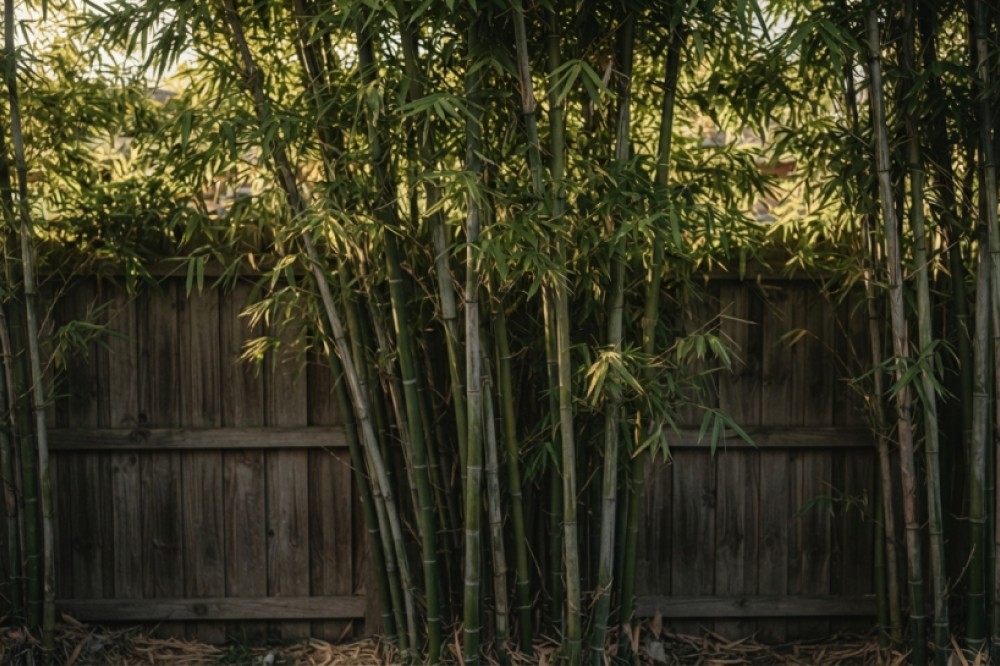
Your neighbour won’t mention the shade until their tomatoes stop fruiting. By then the canes are already six metres tall, leaning slightly toward the light, and the conversation happens over the fence instead of before anything went in the ground.
That’s usually how boundary disputes over bamboo start. Not with roots, not with a formal complaint — with someone noticing, months later, that something’s changed on their side of the line and nobody warned them.
Height is the first thing to get wrong. People plant expecting privacy within a season. Two years later it’s still closing up, or they oversized it and now half the neighbouring yard sits in shade by year three. Bambusa textilis gracilis doesn’t mess around. A metre or more in a single warm month once it’s established isn’t unusual, and a row planted 60cm off the fence line leans straight into whatever gap gets the most light. Usually that’s the neighbour’s side.
Distance from the boundary matters more than most people budget for. A metre back from the fence gives the clump room to thicken without the canes arching straight over. Anything tighter than that, and pruning becomes a two-person job. One of you on a ladder, one of you apologising through the palings.
Most of that could’ve been avoided with better spacing at planting time.
Root Behaviour Isn’t the Real Risk
Root behaviour is the part people actually worry about, and it’s the part that’s usually fine. Clumping bamboo, which is the only kind Red Cloud grows, doesn’t send rhizomes travelling under a fence line the way running bamboo does. The root ball just expands slowly outward from where it was planted. Maybe 15 to 20cm of width a year, once it’s mature. It won’t turn up under a neighbour’s paving three summers from now. Running varieties are a different story entirely, and if a neighbour’s had one turn up under their lawn before, that history tends to make them nervous about bamboo screening generally, even when what’s going in is nothing like what caused the original problem.
That history is worth addressing directly rather than assuming it won’t come up. A short conversation about which variety is going in, and why it behaves differently to whatever spread through next door’s garden a decade ago, tends to defuse most of the concern before it becomes an objection.
Most people relax once they hear that.
Picking a Variety for a Tight Boundary
Not every screening bamboo suits a narrow gap between two fences. A wide, dense grower needs room to arch and fill out. Stick one in a tight side passage and you’ll have canes brushing both surfaces inside a couple of years. Go tighter-clumping and more upright instead. Takes a bit longer for full coverage, but it actually fits the space.
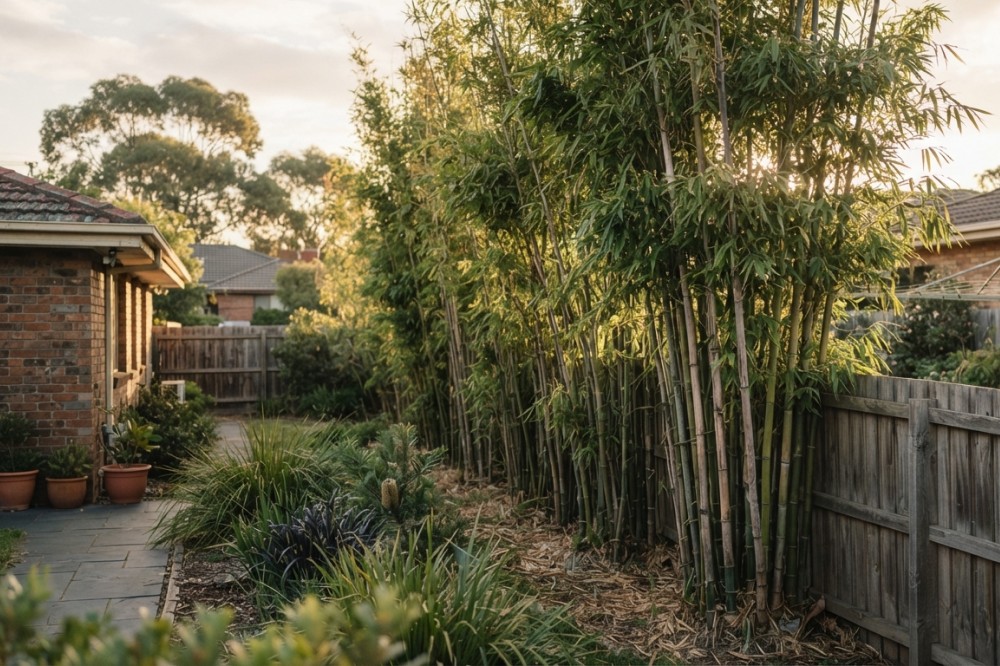
Whoever plants it usually ends up maintaining it, at least at first. That’s not automatic though. Worth saying out loud before the first pruning season, not after. A screen that’s shared visually across two properties often ends up half-maintained. Tidy on one side, shaggy on the other, because nobody agreed on it upfront.
Honestly? Most disputes we hear about aren’t really about bamboo. They’re about two households never having the five-minute conversation before planting day. Where’s the line. How tall is too tall. Who trims the side that overhangs.
A council’s rules on boundary planting vary by municipality, and it’s worth a quick check before anything goes in if the screen’s going in tight against a shared fence. Some have setback requirements written into their local law. Others leave it entirely up to the two property owners. Either way, it’s a call worth making before the truck turns up, not after.
There’s also the question of light, which people underestimate until a screen’s been in three summers. A dense row along a north-facing boundary cuts morning sun to whatever’s on the other side well before it’s even tall enough to bother anyone visually. Got a neighbour with a vegetable patch, or a pool that needs full sun? Factor that into where the row sits, not just how far back it is from the fence.
None of this means skip the screen. It’s still more forgiving than a hedge that needs constant shaping, or a fence extension that needs its own council approval. It just works better when the neighbour hears about it before the delivery truck does.