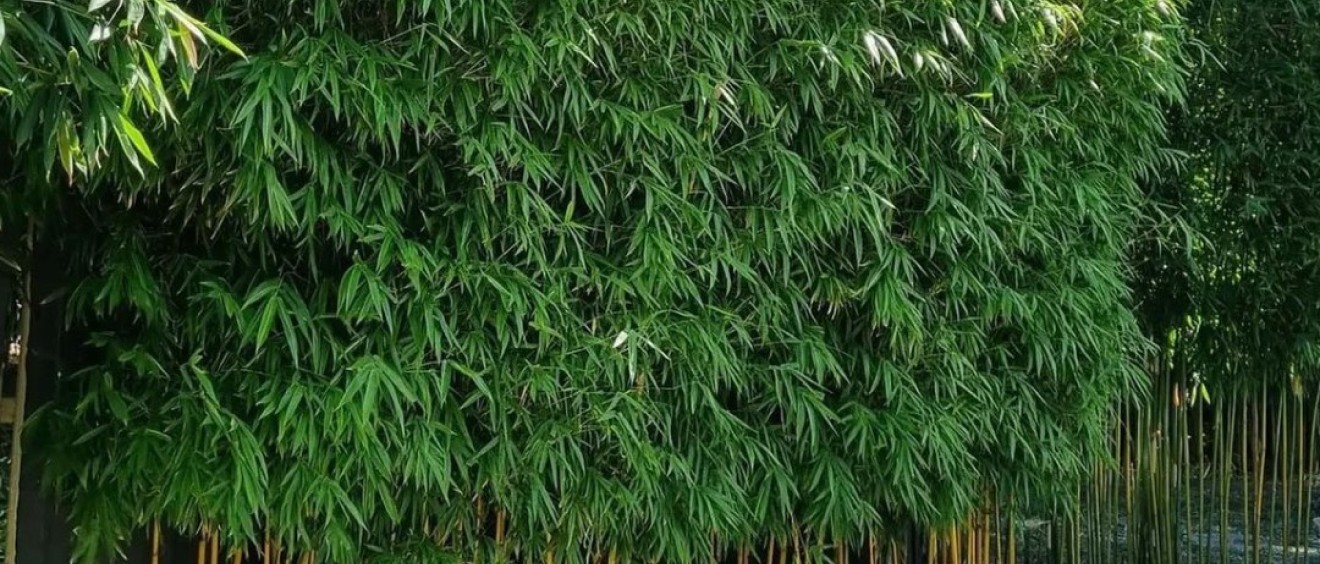
A fence stops the view. Sound comes through. Wind comes through. And after a few years the thing starts looking like a decision made under pressure rather than a considered one. Variety selection is where screening projects quietly go wrong — often well before a single plant goes in the ground.
Choosing the right bamboo plants for screening is something Melbourne gardeners tend to underestimate, and the variety matters enormously. A plant that works beautifully as an accent specimen might stay narrow and sparse at the base when you actually need density at eye level. Getting that wrong means waiting two or three growing seasons to find out.
Why Clumping Bamboo Works for Screening
Running bamboo does screen. Fast, too. The problem is that it keeps going — under fences, through garden beds, into the neighbour’s yard. Once it’s established, getting rid of it is genuinely unpleasant work, and the damage it does to relationships with adjacent property owners tends to last longer than the bamboo itself.
Clumping varieties grow from a central base and stay there. The clump expands gradually outward, maybe 5–10 centimetres per year depending on conditions, which means you can plant it next to a fence line, a path, or a pool and not spend the next decade managing the spread. For a Melbourne garden — where properties are often close together and narrow side passages are common — that containment is the practical point, not just a nice-to-have.
The Height Question
Height is where people get confused, partly because bamboo grows fast relative to most screening plants and partly because the numbers on plant tags aren’t always honest. A variety listed at 6 metres might get there in four to five years in Melbourne’s southeast, or it might top out lower and stay there, depending on soil, aspect, and how much water it gets over summer.
Gracilis is probably the most reliable choice for a tall, tight screen in Melbourne conditions — it throws up dense, upright canes that don’t splay outward and can reach 6–8 metres at maturity. For something lower and more compact, textilis gracilis will give you a screen without the height if overhead space is limited.

Planting for an Actual Screen, Not a Row of Plants
Spacing is where good intentions come undone. Plant too far apart and you’re waiting years for the gaps to close. Spacing at around 1–1.5 metres gets you a functional screen in two seasons. Further apart and you’re waiting four years for gaps to close — which is fine if you’re patient, less fine if you’re planting because the neighbours just put up a deck.
The other thing that matters — and people skip this — is soil preparation before planting. Bamboo is reasonably forgiving, but it rewards a well-drained, amended bed at the start. Heavy clay soil will slow establishment noticeably and leave you wondering why the plant next door looks better than yours.
Honestly? The biggest issue Red Cloud Bamboo sees with screening projects isn’t the variety selection or the spacing. It’s stock bought from interstate — grown in Queensland humidity or South Australian heat, dropped into a Melbourne garden and left to figure it out. That first summer can set a plant back by a full season, sometimes more. Starting with stock that’s already been grown locally cuts a full season off the establishment curve.
Getting the Density Right
A single row of bamboo gives you a screen. Two offset rows give you a wall.
For complete privacy — the kind where you can sit on the back porch and not see or be seen — a staggered double row at roughly 1.2 metre spacing in each row is the approach that consistently performs well. It’s more plants, yes, but it’s also the difference between a screen that works and one that technically works most of the time, except when the wind moves the canes.
Maintenance once established is minimal. Bamboo doesn’t need hard pruning the way a hedge does. Remove old canes at the base every couple of years, clear out any dead material, and let it do what it does. Which, if you’ve chosen the right variety, is grow upright, stay put, and block the view from the neighbour’s deck